
Websites
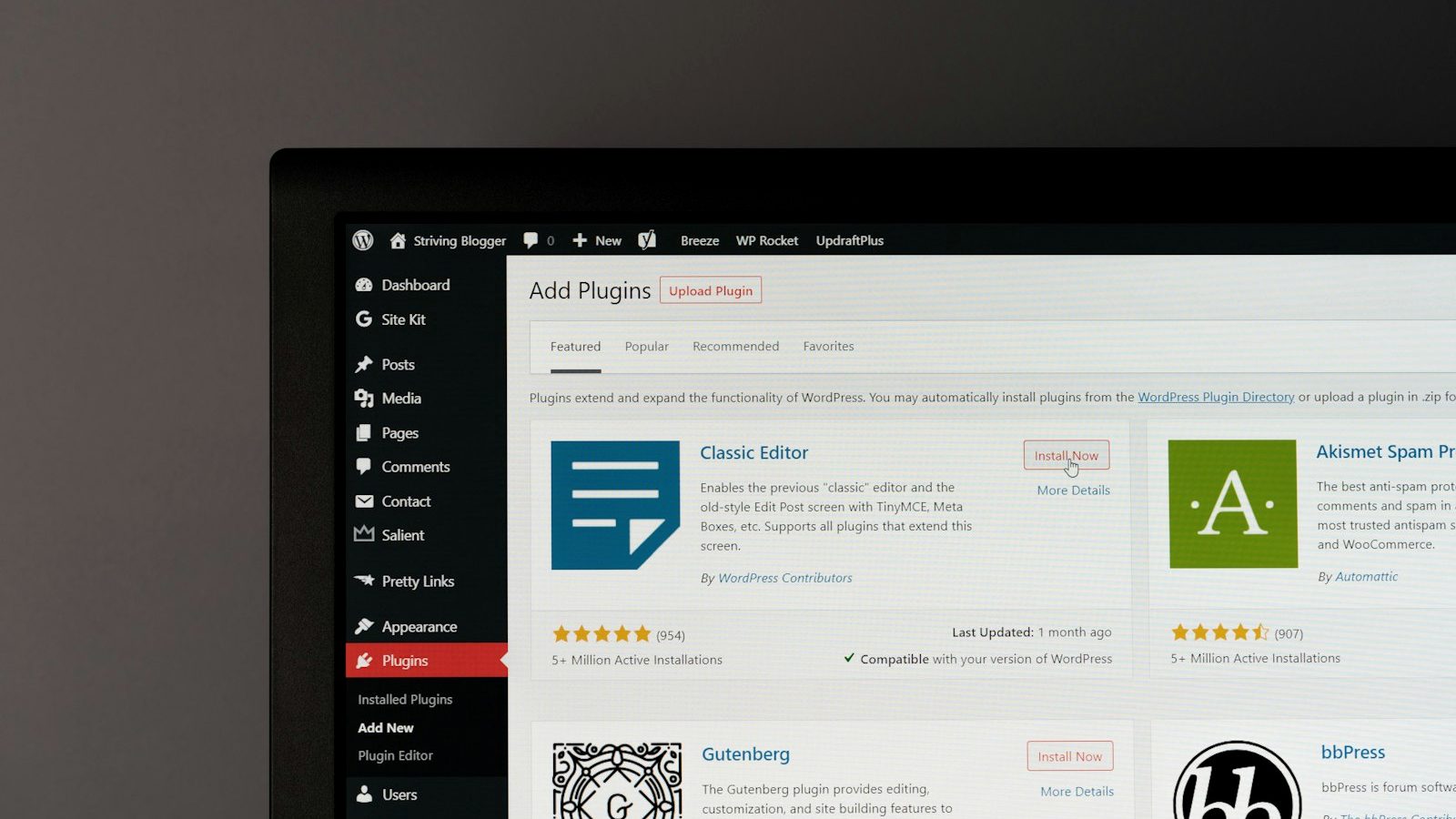
A website builder is the fastest and cheapest way to get a company a site, WordPress has the most flexible value for money, and a custom build is the most expensive but the freest. The right choice depends on what the site has to do: is a business card enough, or does the site have to produce customers?
In this comparison I go through the real differences between website builders, WordPress and custom builds: costs over the long term, search visibility, ownership, and when each one is the sensible choice.
The three options in brief
Website builders (Wix, Squarespace, Webnode and similar) are monthly-fee services where pages are built into a ready-made mould in the browser. All the technology is the provider’s responsibility, and in the provider’s hands.
WordPress is an open-source publishing system installed on your own hosting. The site is yours: you can change supplier, server and design without breaking anything.
A custom build (Next.js or another modern framework, for example) is built from scratch to fit the need. Fastest and freest, but it requires a developer in future too.
Comparison: costs, visibility and ownership
| Website builder | WordPress | Custom | |
|---|---|---|---|
| Starting cost | €0–500 | €0 (yourself) / €3,000–9,000 (agency) | typically €10,000+ |
| Running costs | €15–60/month | hosting approx. €5–30/month + maintenance | hosting + developer support |
| Search visibility | basic level is fine for a blog, limits arrive | excellent when done right | excellent |
| Site ownership | rented: the content can leave, the platform cannot | entirely your own | entirely your own |
| Extensibility | on the platform’s terms | tens of thousands of plugins | unlimited, in exchange for work |
| Skill required | low | moderate or bought in | bought in |
When a website builder is enough
A website builder is a perfectly sensible choice when the site’s job is to say the company exists: contact details, opening hours, a few photos and a description of the services. If customers come from referrals and social media rather than search engines, and the budget is tight, a builder does the job.
The limits arrive at predictable points: when you want to compete seriously in search results, when you need a feature the platform does not support, or when you want to change provider. At that point the site is not modified, it is rebuilt, because nothing comes out of a builder except the texts and images.
When WordPress is the right choice
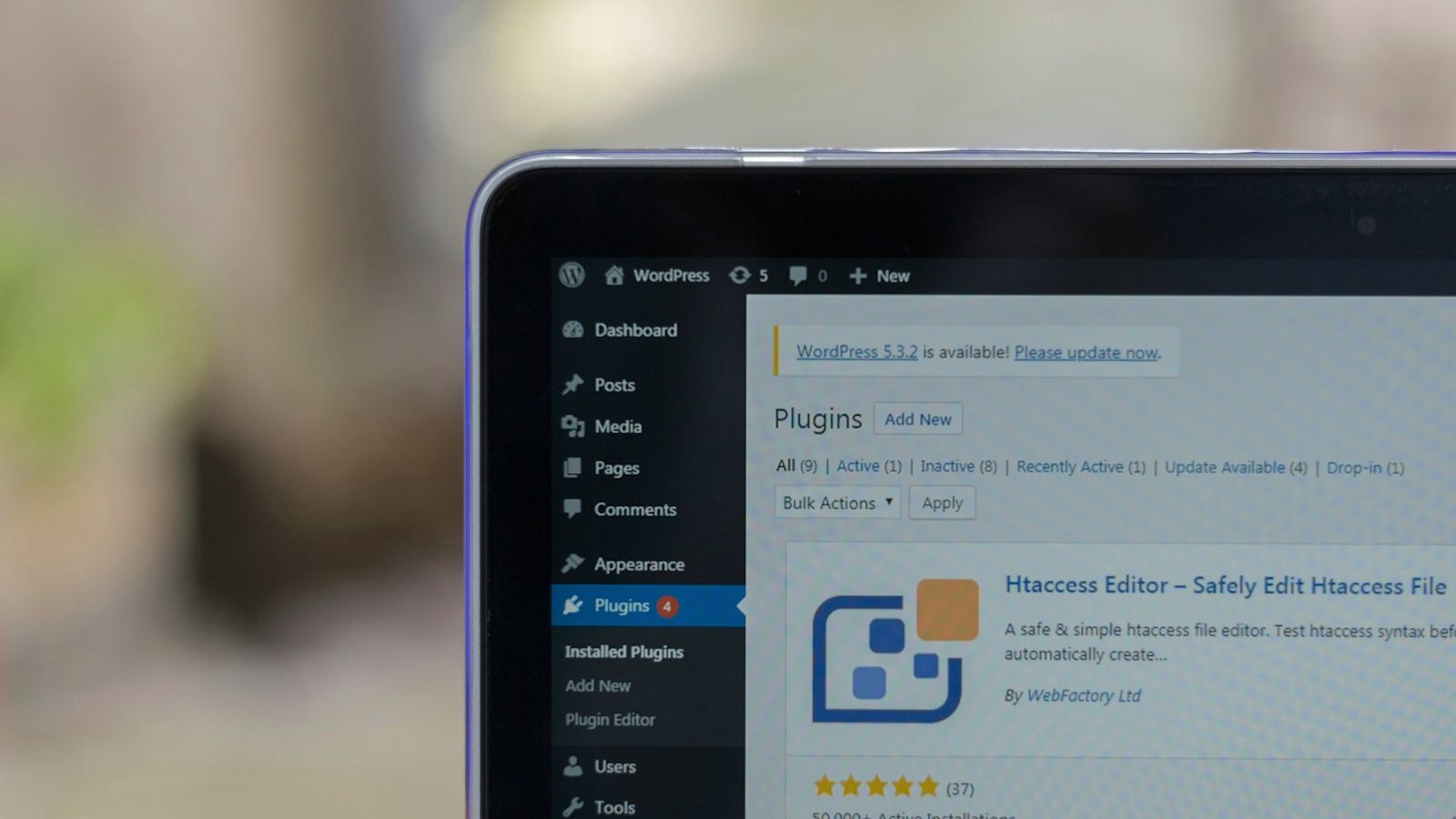
WordPress is the best choice for most small and medium businesses for which the site is a sales channel. The reasons are practical:
- Search visibility. Structure, speed, content types and technical SEO are entirely under your control. In a competitive search that is what decides.
- Ownership. The site, the content and the data are yours. You can put maintenance out to tender, change agency and move the site to another server.
- Room to grow. A blog, landing pages, multiple languages, an online store (WooCommerce), booking calendars and integrations all work on the same base.
- Ecosystem. There are more specialists, guides and plugins than for any other platform, meaning you are not the prisoner of a single supplier.
WordPress’s weakness is that responsibility shifts to you: updates, backups and security have to be handled either yourself or through a maintenance agreement. Left unattended, WordPress decays and becomes exposed to security problems. That is a genuine cost worth including in the comparison.
When custom is worth it
A custom build is justified when the site has hard requirements: exceptionally high traffic, app-like functionality, heavy integrations or performance needs that off-the-shelf platforms cannot bend to. For a small business’s presentation and sales site it is usually oversized: you pay for freedom you will not have time to use.
Wondering which platform suits you?
We tell you plainly whether a light solution is enough or whether it is worth investing. We do not sell heavier than the need requires.
Total cost over three years
The starting price misleads, so let us calculate a realistic three-year total for a typical small business:
- Website builder: around €30/month × 36 months = a bit over €1,000, plus your own time to build it. Cheapest, if the site is not a sales channel.
- WordPress built by an agency: €3,000–9,000 + maintenance, typically €5,000–12,000 in total. The most expensive start, but the only one of the options that competes seriously in search results and stays yours.
- WordPress built yourself: a few hundred euros in costs and dozens of hours of time. Good if you have the time and the requirements are moderate.
The right question is not “which is cheapest” but “what is one new customer worth”. If the site is meant to produce customers, the difference in conversion and visibility pays back the platform difference quickly. More on this on our website service page.
What happens when you want to switch
Switching platform is the moment the differences become concrete. A WordPress site can be moved to another server or another agency essentially as is: the database and files transfer, and the site works as before.
From a website builder nothing transfers except the texts and images, which you copy by hand. The site’s structure, design and functionality are rebuilt from scratch. In practice that means a new project, with a new price.
Search visibility is part of this too. When addresses change, the old ones have to be redirected to the new ones, or the visibility you built up disappears. Some builders restrict redirects, which complicates the move further.
An online store changes the calculation
If you sell online, the comparison is different. Website builders’ store features are enough for a small range, but as the number of products grows, when integrations are needed or when you go international, the limits arrive quickly.
The serious options then are Shopify (easy, monthly fee, commissions) and WooCommerce (on top of WordPress, full control, no monthly commissions). The choice depends on whether you value ease or control.
The questions that settle the choice
If you are unsure, answer these five questions. Every yes argues for WordPress or a custom solution.
- Is search visibility an important channel for acquiring customers?
- Is competition in search results tough in your industry?
- Do you intend to produce content regularly?
- Do you need integrations with other systems?
- Is it likely the site’s requirements will grow within a couple of years?
If you answered no to all of them, a website builder is probably the sensible choice, and there is nothing to be ashamed of in that. The wrong decision is paying for a complex system nobody needs.
Summary: the choice in three sentences
If the site is a business card rather than a sales channel, a website builder is enough and is both cheapest and fastest. If the site has to bring in customers from search engines and grow with the business, WordPress is the best choice for most small companies. Custom is worth going to only once off-the-shelf platforms cannot bend to the requirements.
The single most important thing in the choice is ownership. A WordPress site is yours and portable; on a website builder the site is rented. That is not a problem if the requirements stay the same, but it is an expensive surprise when they change.
Frequently asked questions
Which is better, a website builder or WordPress?
It depends on the job. For a business-card site a builder is enough and is cheapest. If the site has to show up in search engines and produce customers, WordPress is the best combination of visibility, ownership and cost for most small businesses.
Can you move from a website builder to WordPress later?
The content (texts and images) can be moved, but the site is essentially rebuilt. Search visibility also has to be rebuilt carefully with redirects so the visibility you accumulated is not lost in the move.
Is WordPress free?
The software itself is free. Costs come from hosting (around €5–30/month), any paid plugins and theme, and the work: either your own time or an agency’s build and maintenance.
Does a site built on a website builder show up in Google?
It does, and the basics (titles, descriptions, a blog) work on most builders. The restrictions arrive in competitive searches, where technical control, speed and structural freedom decide.
What does a company website cost?
On a website builder €0–500 plus a monthly fee. An agency-built WordPress site for a small business typically costs €3,000–9,000, with larger and custom builds more. The price depends on the number of pages, the level of design and the functionality.
Related articles

Websites
Visitors but no enquiries: a guide to conversion optimisation
Conversion optimisation means improving a site so that a larger share of visitors take the desired action: get in touch, buy or book. It…
8 min

Websites
Website redesign: when it is worth it and what it really costs
A website redesign is worth doing when the current site does not produce enquiries, looks dated on a phone, or is so awkward to…
8 min

Websites
Website accessibility: does the requirement apply to you and what does it demand
Website accessibility means a site can be used even when sight, hearing, motor skills or concentration are limited. For the public sector it is…
8 min
Get in touch
Shall we take the first step together?
Tell us briefly where you stand. We reply the same working day, usually within a couple of hours.
- A free 30-minute call, no strings attached
- You get a concrete view of where you stand
- We say plainly if we are not the right fit
- Phone+358 50 469 0039
- Emailmisa@purodigital.fi